
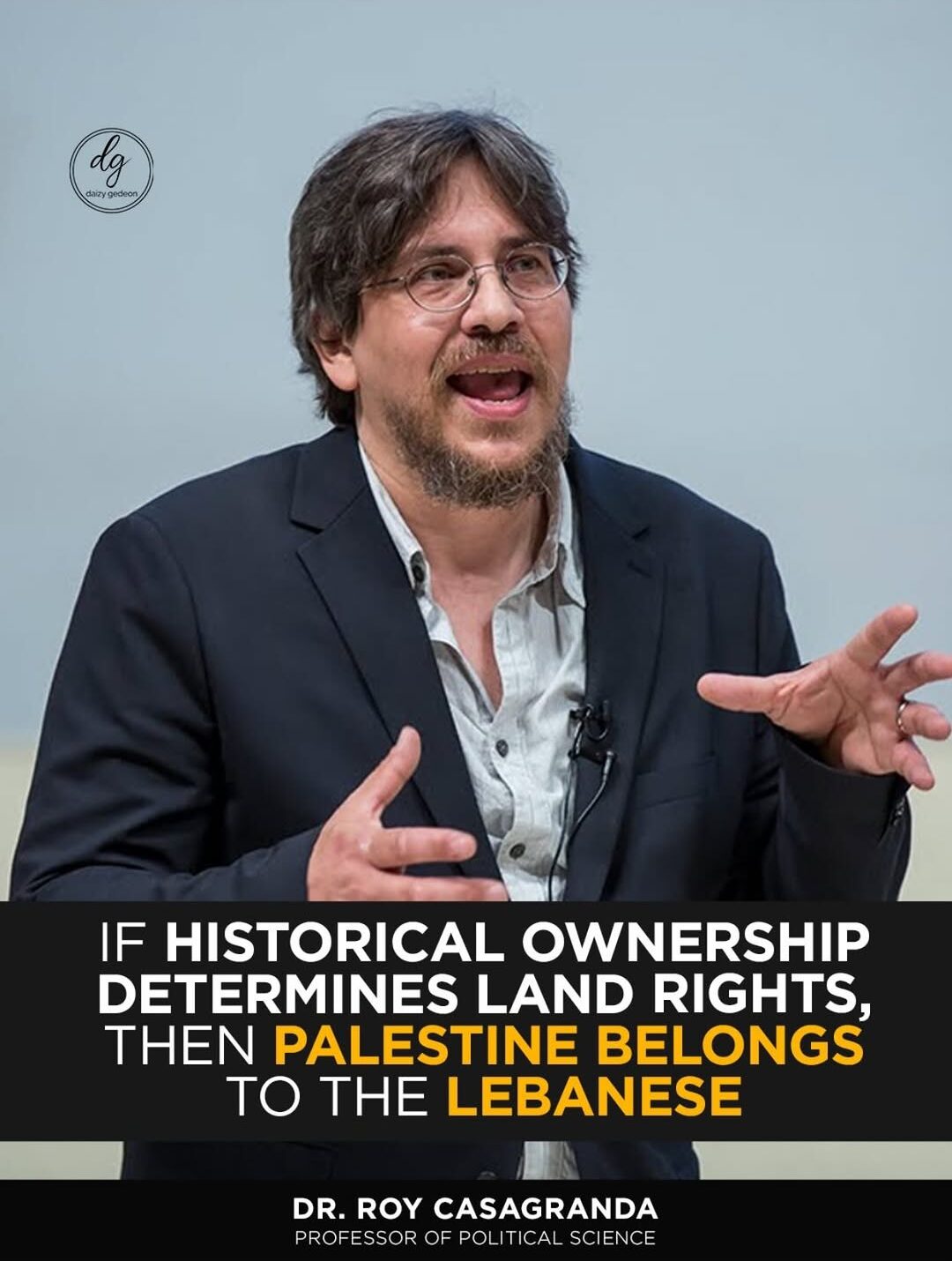
If History Decides Land Rights, Palestine Belongs to the Lebanese, Says Political Scientist Roy Casagranda
January 3, 2026
IF HISTORICAL OWNERSHIP DETERMINES LAND RIGHTS, THEN PALESTINE BELONGS TO LEBANON.
That’s not provocation, it’s logic.
Phoenicians lived along Palestine’s coast.
Lebanon’s cities, ports, and people are woven into that history long before modern borders, mandates, or slogans.
History doesn’t justify occupation.
It exposes how selectively history is used to legitimize land grabs while ignoring every other era, people, and claim that doesn’t fit the narrative.
If ancient presence is the standard, then the argument collapses under its own weight.
And Lebanon’s erased history resurfaces.
History isn’t a weapon.
It’s a mirror and some don’t like what it reflects.
@Age_of_Empire
#Lebanon #Palestine #HistoryMatters #gaza #fyp
English Script:
Dr. Roy Cassagranda: This idea of the right to the land at some level is, first of all, complicated by history. I mean, Phoenicians lived on the coastal cities in Palestine. So if you really want to rule by the land, all the coastal cities should belong to Lebanon. And then there were Arabs always living in the Negev. And so that should go to Saudi Arabia or something.
Interviewer: So where do you draw the line?
Dr. Roy Cassagranda: Where do you draw the line? And at what point do you stop? So did you stop a thousand years ago because the land belonged to Crusaders, a thousand years ago? This idea of “Oh, there was a moment when….Well, yeah, there was a moment when Egypt owned it. In fact, Egypt regularly owned Palestine throughout history. Whether it was the Mamluks or the 18th dynasty, there was frequently an Egyptian military and political presence.