1957 Historical Video Shows Strength and Conviction of Palestinian Refugees and Right of Return
March 9, 2026
“THIS IS MY OWN LAND.”
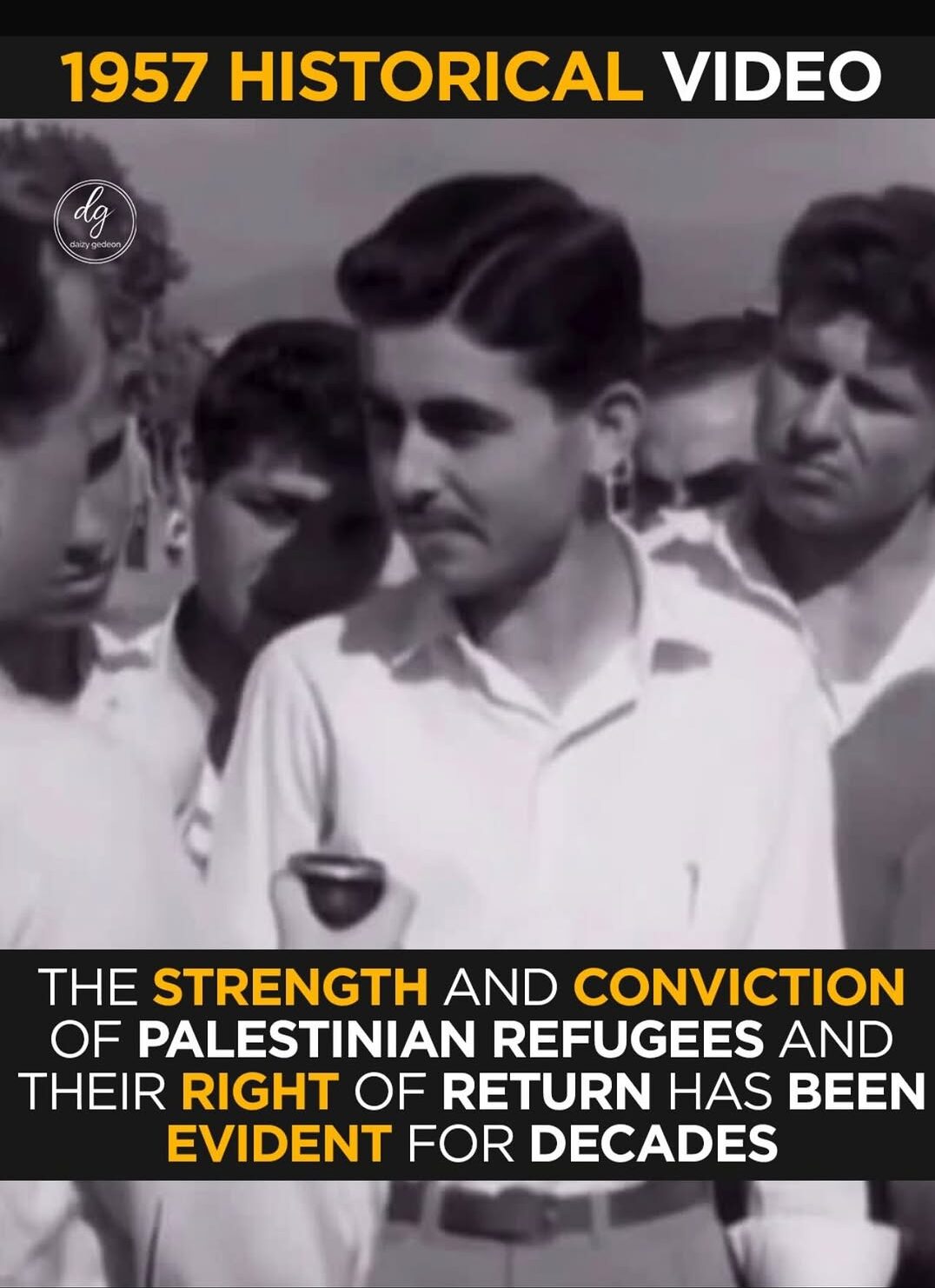
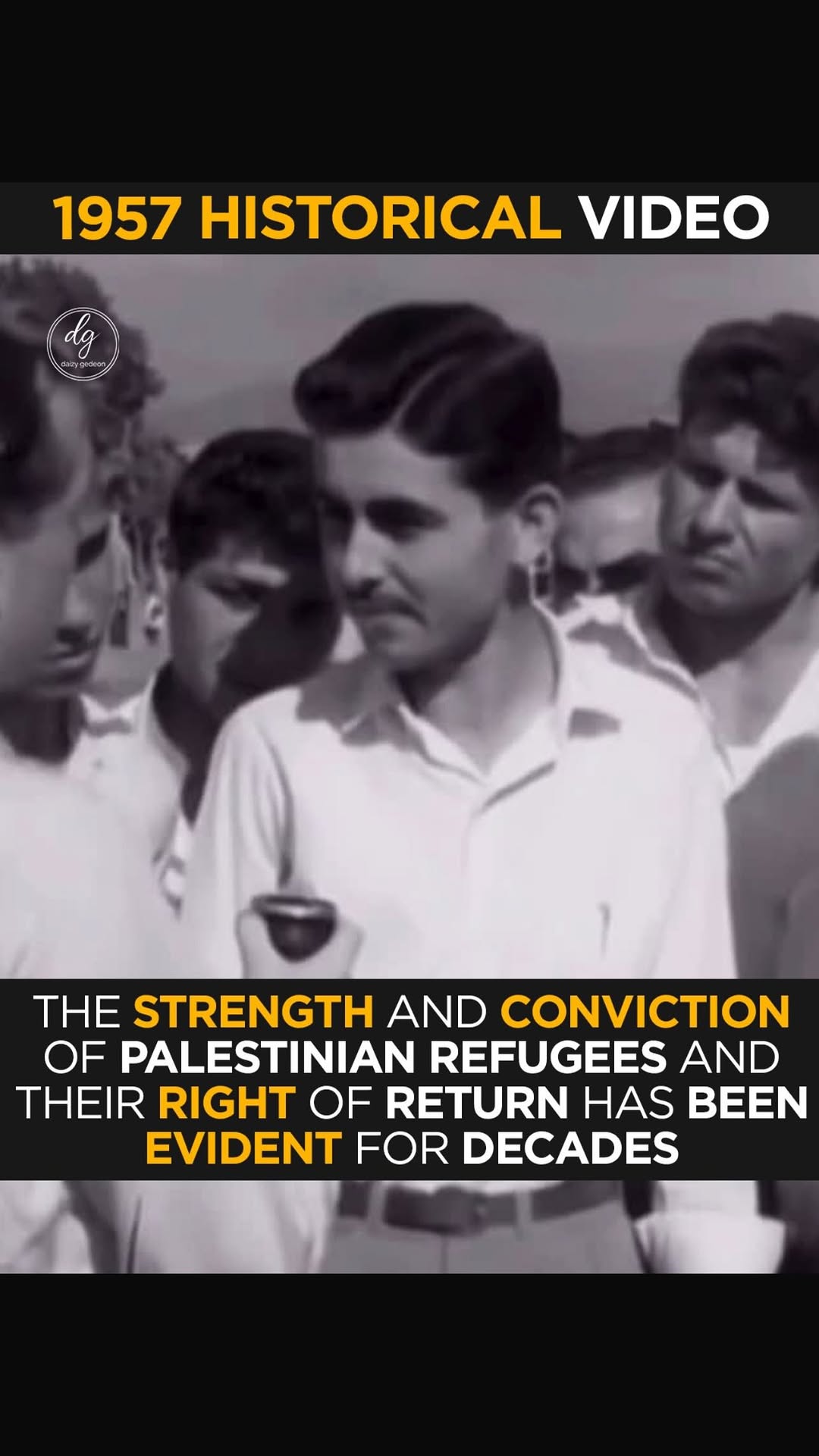
Look at this face. Listen to this voice. This was 1957—just nine years after the Nakba.
A 17-year-old boy, standing in a camp in Lebanon, isn’t asking for a better tent or a “”permanent house”” in a foreign land. He is telling the world, with a conviction that has not wavered in 78 years: “”I want to go back… because this is my own land.””
For decades, the narrative has been sanitized. The UN calls it “”having to leave.”” They call it a “”refugee problem.”” But the truth is etched in the iron keys these families still hold today. It wasn’t a choice; it was a violent expulsion. And yet, the strength of the Palestinian spirit remains the most powerful force in the Middle East.
“They always hope to go home.” Even in 1957, the world was trying to “”resettle”” them elsewhere, to make them disappear into the background of other nations. But you cannot resettle a soul that belongs to the soil of Acre, Jaffa, and Haifa.
WE MUST NEVER FORGET.
#Palestine #RightOfReturn #Nakba1948 #Lebanon
English Script:
Interviewer: Where were you born? In Palestine?
Palestinian boy: Yeah, I am born in Palestine, in Deir al-Qasi village, Acre district.
Interviewer: Are all your family here in the camp?
Palestinian boy: Yeah, all my family is in the camp.
Interviewer: How many?
Palestinian boy: They are six persons.
Interviewer: How old are you?
Palestinian boy: I am 17 years of age.
Interviewer: Married?
Palestinian boy: No, still studying.
Interviewer: Do you want to go back to Palestine?
Palestinian boy: Okay, surely. Sure, I want to go back to Palestine.
Interviewer: Why?
Palestinian boy: Because this is my own land. I want to…you know. This is my land.
Interviewer: Is there any chance of these refugees being allowed to return to their homes?
UNRWA official: Well, of course, you know, more than eight years ago, they had to leave their homes in Palestine and Palestine is now Israel. Israel was a member of the United Nations. And unless there was some basic decision by the United Nations that they could all go back home. It looks at the moment as if some of them will probably have to be resettled elsewhere.
Interviewer: Now, why are they still living in camps? Why aren’t they settled in countries?
UNRWA official: Well, there are 924,000 refugees living in four countries, and they form 16% of the total population of these countries. And so it’s impossible to settle them all in private houses. However, they always hope to go home. And so don’t want to settle in what we would call permanent houses.
Interviewer: That said that the Arab governments have a vested interest in keeping these refugees in a bad condition. Does UNRWA agree with that?
UNRWA official: No, I don’t think the governments are purposely trying to keep the refugees poor. The countries themselves are poor. We provide a very meager ration, and the countries are hoping that someday refugees will go home.