Is Iran the Real Winner of the Ceasefire? Experts Weigh In
April 9, 2026
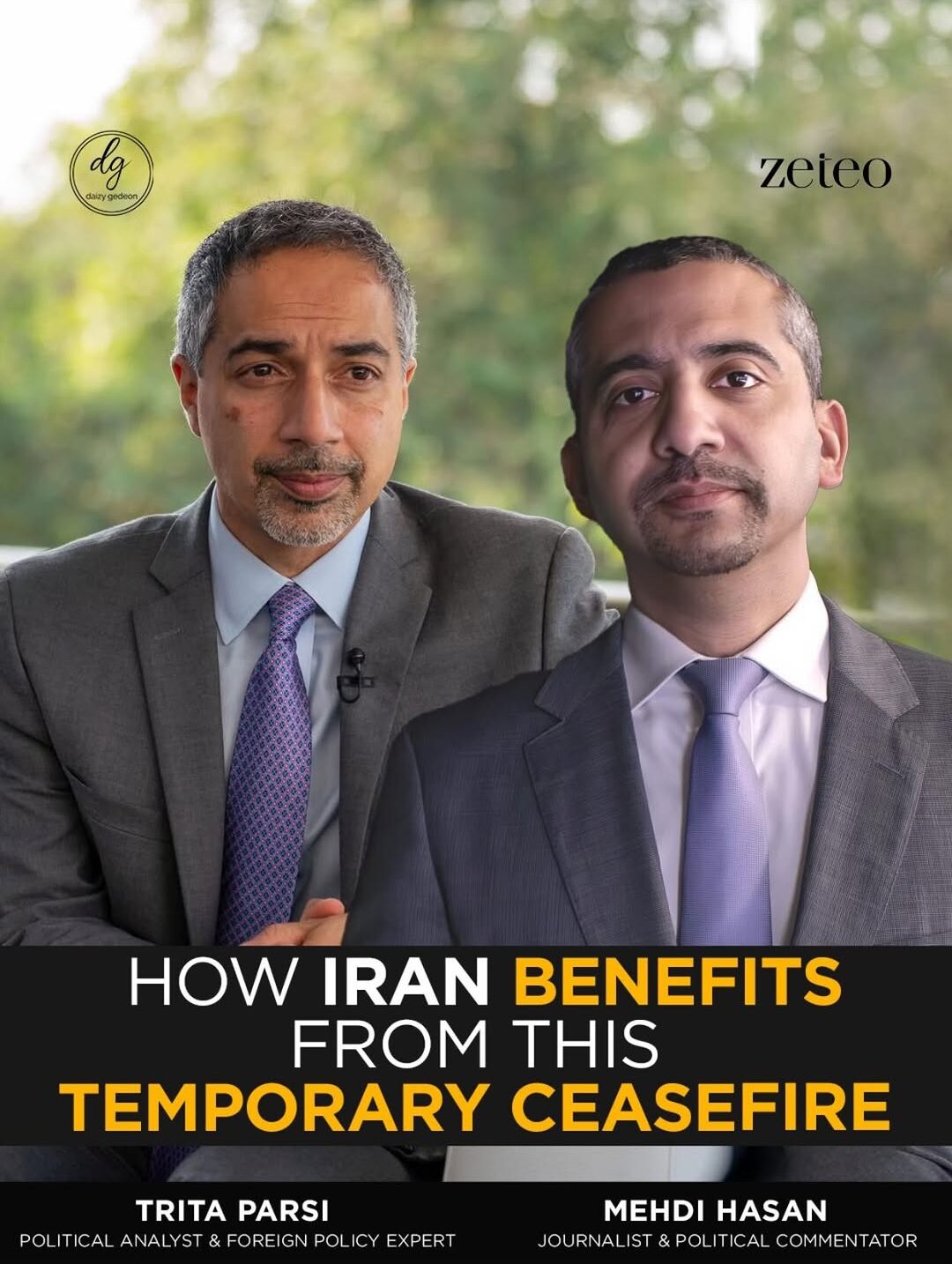
On the latest episode of Mehdi Unfiltered on Zeteo, host Mehdi Hasan (Founder of Zeteo) is joined by Trita Parsi (Co-founder of the Quincy Institute) to break down the Islamabad Accord, a fragile 14-day ceasefire between the U.S. and Iran.
While the Trump administration frames the truce as a diplomatic victory, Parsi and Hasan argue that the terms which include a 10-point plan favoring Iranian demands represent a massive strategic win for Tehran. By securing a pause in hostilities on their own terms, Iran has effectively stalled President Trump’s genocidal threats, stabilized its control over the Strait of Hormuz, and opened a window to reorganize its regional proxies.
Courtesy of @zeteo
#Iran #Ceasefire #breakingnews #straightofhormuz #fyp
English Script:
Mehdi Hassan: I got to ask you this question about the actual ten point plan and we were talking about this before you joined, which is the Iranians have claimed victory. Iranian state TV has claimed victory. The Supreme National Security Council has claimed victory. Iranian Foreign Minister Araghchi has posted it saying, we’re looking forward to temporarily opening the strait, assuming we’re not attacked for the next two weeks. But talk to us, talk to our people watching right now on YouTube and Substack and the tens of thousands who want to hear the answer to this question. What is in these ten Iranian points that Trump has agreed to, that could come back to bite the Republican Party in Iran Hawks in the ass?
Trita Parsi: Well, to just summarize some of them, the key things in it, of course, is that they want a permanent end to the hostilities. They’re not looking for any ceasefire. They cannot afford to be part of Israel’s mowing the lawn strategy. What they’re doing towards the Palestinians in Gaza, in Lebanon and Syria, in which Israel is constantly bombing them every few weeks or every few months or every three years, that’s not going to be acceptable. And they don’t want to be in a scenario in which, even if the ceasefire last six months, that the Israelis are back after that, starting a war, so they want security guarantees. I’m not so sure that paper is written on as much worthy, but nevertheless, that is going to be one of these things they’re going to be asking for. But the more important ones are they’re going to ask for our sanctions to be lifted as part of a deal. And again, it shows that the Iranians have leverage now in a way that they didn’t have before, even in the previous negotiations, their demands for sanctions relief was far more limited than what it is now in these negotiations. You know, the language of this coming out does not say that the Iranians will not charge a transit fee. So it’s not clear the Iranians may continue to charge a transit fee for ships going through the straits. The strait was never technically closed.
Mehdi Hassan: The ten points includes, my understanding, correct me if I’m wrong, that Iran will retain some control over the Strait of Hormuz.
Trita Parsi: Exactly.
Mehdi Hassan: Which was not the status quo pre the war. So they have something here. No one recognized Iran had a right to control the Strait of Hormuz.
Trita Parsi: And if it ends up being a permanent state and the legal basis of it is frankly questionable. But there may be a foundation for it that will be found, but nevertheless, this will be a new feature of the geopolitics of the region that did not exist before and it’s very significant. Now, part of the reason why the Iranians are not giving it up entirely is because earlier on, three weeks ago, perhaps they would have. But at this stage, instead of using it as leverage to end the war, they’re using it as leverage to manage the relationship with countries after the war. They’re going to use this transit fee to renegotiate and reestablish economic relations with a large number of Asian countries who tended a long period of time were a close trading partners of Iran. But in the last ten, 15 years have been chased out of the Iranian market by US sanctions. They want to reestablish those relations, and they’re going to use this transit fee mechanism as a way of forcing them to have that relationship with them.