Anthropic CEO Dario Amodei Defends Claude AI After Deadly Iran School Attack Controversy
June 15, 2026
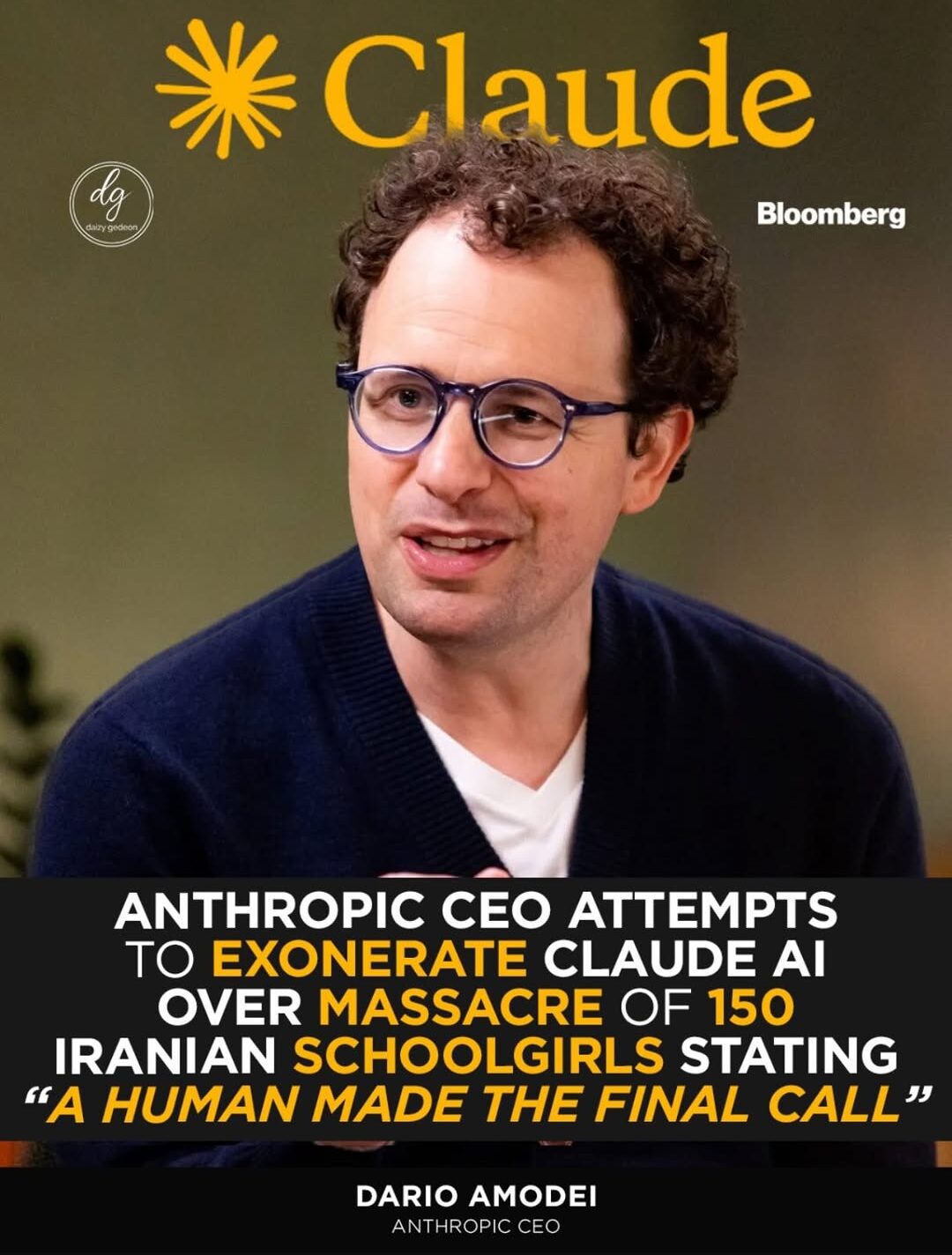
150 schoolgirls were killed.
And when asked about the role of AI, Anthropic CEO Dario Amodei responded that “a human made the final call.”
For many people watching, that answer raised more questions than it answered.
If AI systems are helping process intelligence, identify targets or influence military decisions, can tech companies simply step back and claim no responsibility when civilians die?
Who built the system?
Who approved its use?
Who profits from it?
And who is held accountable when it contributes to tragedy?
The controversy has intensified after footage circulated showing Amodei smiling awkwardly while responding to questions about the deaths of schoolchildren in Minab.
For grieving families, debates over algorithms and decision chains mean little.
What matters is that children are dead.
And many are demanding answers from both the governments using these technologies and the companies building them.
Because when technology becomes part of the machinery of war, accountability cannot stop at the person who pressed the button.
Source from X: @yanisvaroufakis
#DarioAmodei #Anthropic #ClaudeAI #Iran
English Script:
Interviewer: Bloomberg has reported that Claude is being used by the US military in the war in Iran to do AI assisted targeting via a platform made by Palantir Maven Smart System. In February, a US missile reportedly hit a girl’s school in Iran, killing more than 150 people, most of them children. Did Claude play a role in that strike?
Dario Amodei: We don’t know exactly how these models were used. Obviously, these things that, you know, mistakes that happen in warfare are really, really terrible; like, this is a really terrible thing to happen. We were willing to risk the future of our company to, like, limit how these models are used and what you’re talking about is a use case that doesn’t even violate our red lines. We’re worried that there will be a hundred times as much, you know, with use cases that do violate our red lines. Now, again, I would say I think overall the use of these models is appropriate. I think it’s good on net. But military decision makers make terrible mistakes even at the best of times. And I don’t know if we’re in the best of times. What we’ve seen here is Claude assists, but a human makes the final call. So, a human made that final call, not Claude. Imagine if you had a world in which, not Claude because we haven’t allowed it, but someone else’s AI model, the AI model just makes the decision and the human never sees it. That’s what we were standing up for. That’s what we were fighting against.
Interviewer: This school had a website. You could have found it in a Google search. Like, shouldn’t Claude have spotted that? And does it speak to a scarier issue about using technology as a shortcut in war?
Dario Amodei: The principle that was obeyed here is that a human makes the final decision. I don’t know what role Claude or any other AI had, but like, if this isn’t an illustration why that principle is so important, I don’t know what is.
Interviewer: Is AI warfare more likely to stop World War III, a war between the US and China, or is it more likely to make it happen?
Dario Amodei: I would say on balance it is more likely to stop it. But if we have no limits on how it’s used, then I think, you know, it could be more likely to cause it. You’ve seen Dr. Strangelove, right? The premise of it was like, you have a doomsday device that automatically fires nuclear weapons when it thinks nuclear weapons are being fired at it. What could go wrong, right? I think the way conflicts happen is that the two sides jump at each other. They misunderstand each other and when we don’t have proper oversight of this technology, I think those kinds of accidents are more likely to happen.


