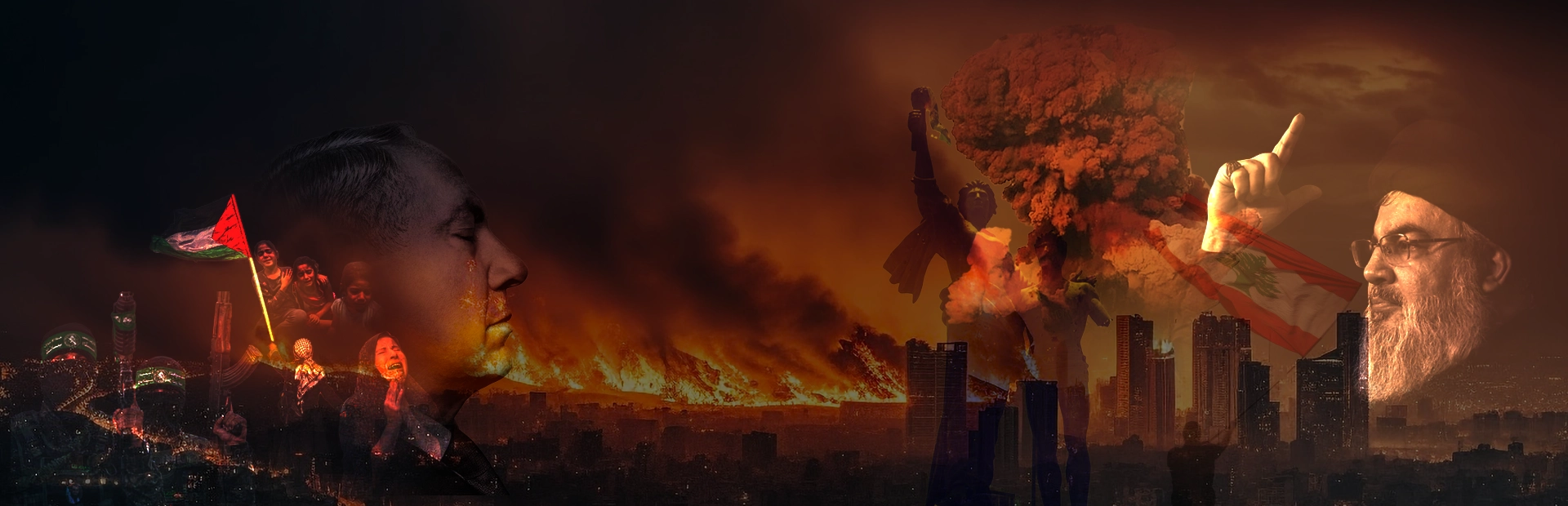

Rami Khouri and Mehdi Hasan Discuss Iran’s Challenge to US Power in the Middle East
July 21, 2026“THEY ARE TRYING TO END THE COLONIAL PERIOD.”
Speaking with Mehdi Hasan on Zeteo, Harvard Kennedy School Senior Fellow Rami Khouri breaks down the long-term historical forces driving current regional conflicts.
The current friction between global powers and regional actors isn’t just about short-term deals, it is a long-term push against historical foreign dominance.
Areas like Lbanon, Plestine, and Ir*n remain active hotspots because their histories were most impacted by external intervention.
Khouri notes that while many regional states hold formal independence, major economic and military decisions remain tied to foreign approval.
Watch the clip to understand the historical context behind today’s headlines. SHARE!!
Source: @zeteo
#iranvsusa #journalism #colonialperiod #fyp #DigitalActivism
English Script:
Mehdi Hassan: Iran responded again by hitting Gulf countries, again by hitting Jordan. A lot of these countries sent delegations to Ayatollah Khomeini funeral. So a lot of people watching, like what is going on in this region? Is it a love hate relationship? Are they a frenemies? What is the relationship right now between Iran and its Muslim majority neighbors, shall we say?
Ramy Khoury: The reality, I think, mainly to understand the bigger picture of what’s going on. Is that what we’re witnessing in the immediate sense is a confrontation between the United States and Iran, and Israel is playing a role there, Lebanon as well. The bigger picture is that the Iranians, whose positions are supported by probably 80% of people across the entire Middle East, they’re trying to end the colonial period. This is not just a short term project. And when I say the colonial period, I mean, when you look at where are the three biggest places that resist and confront and challenge the United States and Israel, they’re Lebanon, Iran and Palestine. They’re the three most active fronts. Why is that? Because they were the most devastated with by their colonial encounters in many different forms. going back for the last couple of hundred years. So this is a long process. They have reached an agreement in the short term about something. But the agreements are, you know, I when I look at Trump, I see Wile E. Coyote, the, you know, the Roadrunner cartoon character. Those of you who know. And Wile E Coyote was getting bombs and putting up cement walls and dropping boulders trying to catch the roadrunner and all of the things he does explode in his face. So this is Trump in action, and he doesn’t know how to deal with this. And it’s going to go on and on until his people restrain him. But the bigger than that is the deeper picture of situation. The region, the Arab countries mostly are these sovereign countries. They’re independent, but they don’t really have full sovereignty because any major decision, any Arab country makes, trade deals, water sources, military sales, whatever has to be approved by some patron. It used to be the British and the French. Now the Americans play a role. The Turks play a role. The Iranians play a role. Sometimes the Russians, occasionally, maybe the Chinese. There are no sovereign, fully sovereign countries in the Arab region right now, unfortunately. Iran is showing what sovereignty really is all about.


