BBC BOSSES ADMIT COVERAGE TITLE OF ICJ HEARINGS WAS BIASED TO ISRAEL
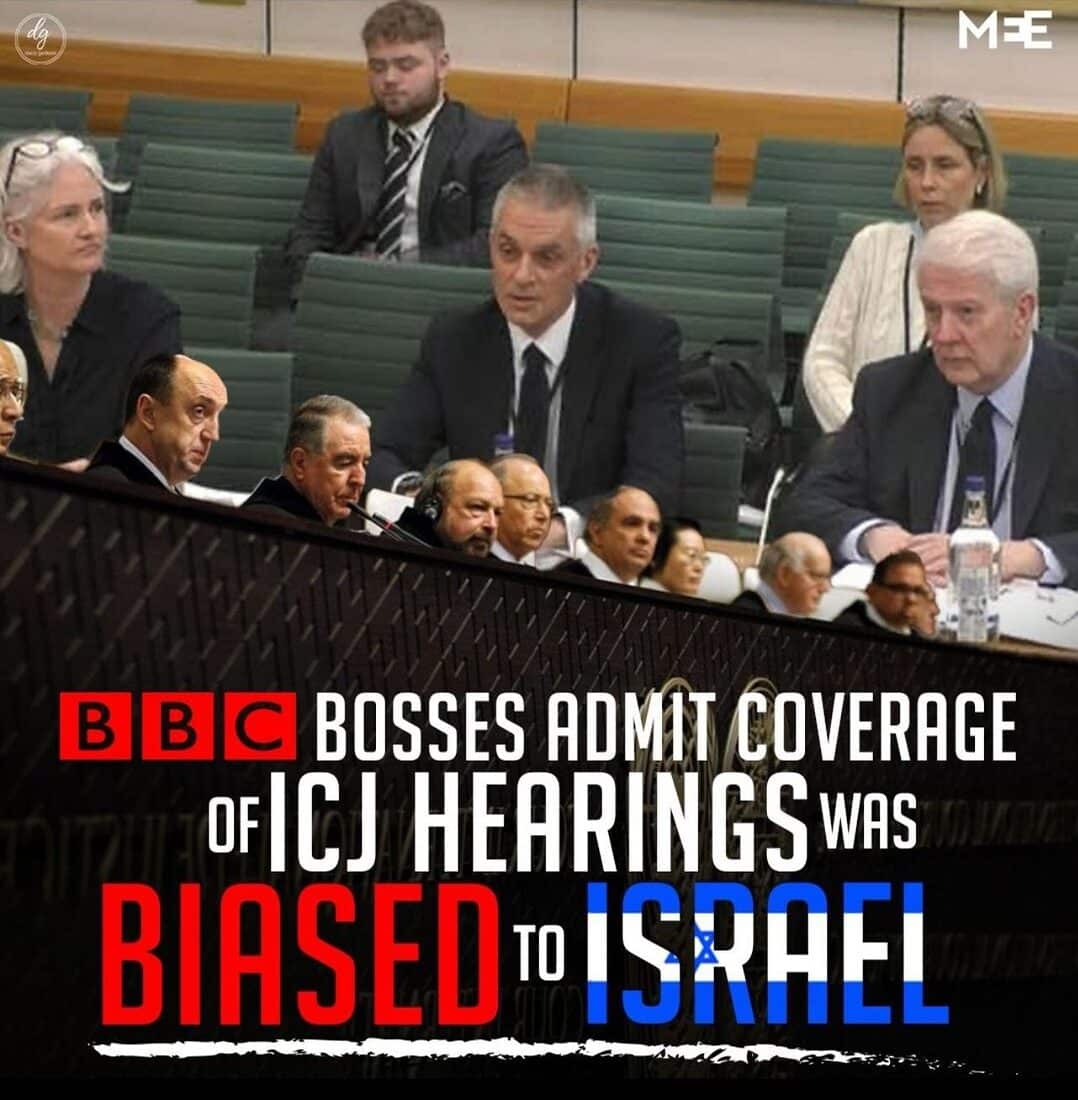
March 22, 2024BBC bosses have all but admitted that the BBC News Channel‘s coverage of part of the International Court of Justice (ICJ) hearings were biased towards Israel. Of course, the BBC would never admit the systemic bias which led to MPs’ questioning the broadcaster about the issue – instead calling it a “mistake”.
The ICJ admission came after Labour MP Julie Elliott asked the panel about the BBC‘s coverage of the ruling. It found ‘plausible’ evidence that Israel was committing a genocide in Gaza.
Elliott asked: “The ICJ hearing, several weeks ago, was a hugely significant news item… the [BBC] News Channel [showed] hardly any of the South African submission on day one, and yet hours and hours of the Israeli submission on day two. Have you looked into the disaster that was in terms of impartiality – because that wasn’t impartial.”
David Jordan, the director of editorial policy and standards, told MPs that the news team may have “done it differently” in hindsight.
WATCH NOW!
@middleeasteye & thecanary
If you advocate for TRUTH & JUSTICE, SHARE to spread the knowledge.
#FreeGaza #PalestineSolidarity #GazaGenocide #UNRWA #EndGenocide #Palestine #ICJJustice #ceasefirenow #FreePalestine #Interfaith #StandWithUs #Truth #Palestine #Gaza #Humanrights #Israel #فلسطين #اسرائیل #غزة #airdropaidforgaza #middleeast #egypt #truth #facts
.
English Script:
Julie Elliot: The ICJ hearing several weeks ago was a hugely significant news item. The channel that replaced the news channel. There was hardly any of the South African submission on day one, and yet hours and hours of the Israeli submission on day two. Have you looked into the disaster that was in terms of impartiality because it wasn’t impartial.
Tim Davie: We’ve had lots of, as you now, I get significant feedback from people on either side if we can simplify it, even the zionist side on this…
Julie Elliot: I don’t think there is two sides to this, I think it’s an issue of impartiality.
Tim Davie: I mean David may look at it, but we did cover in detail that ruling.
Julie Elliot: I watched it, all of it.
Tim Davie: Yeah but I’m just…on one outlet in terms of we can debate the ins and outs of that. But overall, I think we’ve been pretty robust in covering the ICJ proceedings.
Julie Elliot: So you think it was fair to have a tiny bit of the South African submission and then switched to the post office, which again is a very, very important story.
Tim Davie: I think overall…
Julie Elliot: But then have hours and hours the next day of the other side’s submission. You think that was fair and impartial?
Tim Davie: I think on a rolling news channel you’ve got in terms of selections, in terms of what’s going on.
Julie Elliot: Do you think that was fair and impartial and balanced?
Tim Davie: I think overall, when you look at our coverage on the rulings, we’ve been in a reasonable position.
Julie Elliot: David, do you think it was fair and impartial? The coverage of those two days of hearings I’m talking about.
David Jordan: Yes, I think I think you’ve put your finger on something very important about what happened because it only happened on our UK output. The the the international output covered the two sides of that conflict and of the presentations that were made to the ICJ. They covered them equally in our international coverage, but in our UK coverage because the hearing on the post Office was being held at the same time they made the editorial decision to go with the post office coverage rather than the other coverage, which as you could tell, was a very difficult decision to make when they looked at it and when news looked at it, in retrospect, they did think that perhaps they’d made a mistake in not making the two live coverage events similar or the same. But they did make all the other coverage was very similar. It was very, very comprehensive. So it was just about the live coverage on the news channel on those two days, which wasn’t absolutely equivalent. And in this particular conflict, if you don’t have absolute equivalence, as you know, it leads to people suspecting that you’re doing something deliberately to be biased. That isn’t the case. It was genuinely a difficult editorial decision about which hearing they went with.
Julie Elliot: You think that was a mistake to do the covering…
David Jordan: The news have said that they, if they thought about it again, they might have done it differently.
Julie Elliot: Okay.