U.S. Sanctions International Criminal Court Judges After Benjamin Netanyahu Warrant, Sparking EU Sovereignty Debate
April 24, 2026
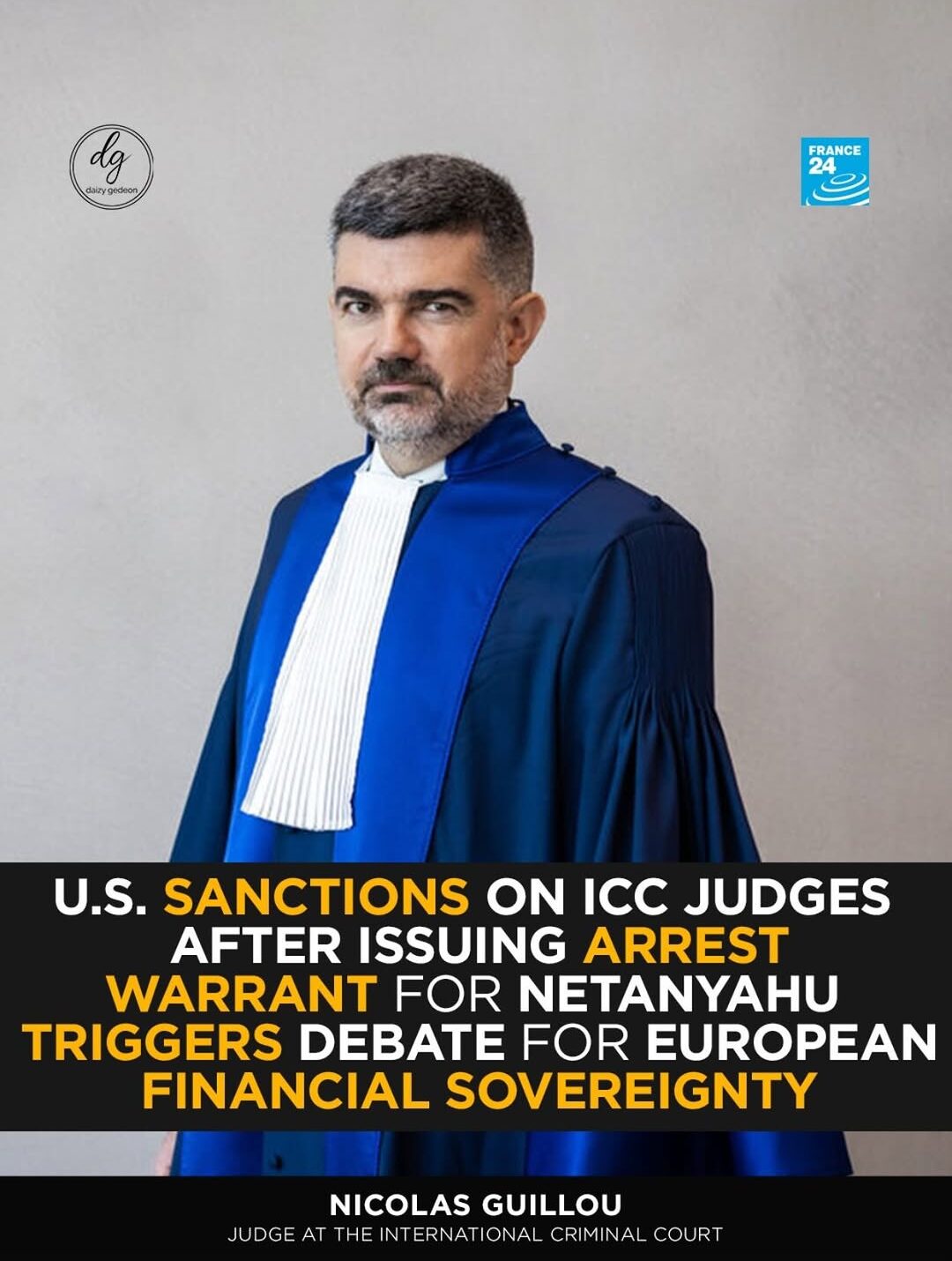
ICC Judge Nicolas Guillou @nicopaulmichel has revealed that he is currently unable to use his bank cards even on European soil. The reason? He is one of the judges who issued an arrest warrant for Israeli Prime Minister Benjamin Netanyahu, leading the United States to slap him with financial sanctions.
In a candid interview, Guillou described being stranded at a train station in the Netherlands, unable to pay for basic services because the only accepted payment methods were American or Chinese. “When you are a European citizen and a foreign country cuts off your payment options, you no longer have any way to pay,” Guillou warned, calling the situation a “huge vulnerability.”
SHAME.
Courtesy of @france24_en
#ICC #DigitalEuro #BankingSovereignty #NicolasGuillou #fyp
English Script:
VO: Since last summer, Nicola Guilou has been unable to use his bank card. He’s one of the judges on the International Criminal Court who issued an arrest warrant for Israeli Prime Minister Benjamin Netanyahu. As a result, he was sanctioned by the United States, a major ally of Israel. Since then, the judge has been experiencing the consequences of European dependence in banking matters on a daily basis.
Nicola Guilou: I was in a train station in the Netherlands a few weeks ago. There was a sign that said “no cash”. It has logos of payment methods, all chinese or american. So that means that when you are a European citizen and a foreign country cuts off your payment options, you no longer have any way to pay. This shows that we absolutely must regain sovereignty, because it is in fact, a huge vulnerability. Today, it’s happening to even ICC judges and prosecutors, but it could happen to many more people.
VO: It’s a crippling situation that led this judge to take a close interest in the digital euro project being discussed in Brussels. It’s a form of electronic money issued directly by the European Central Bank and distributed by private banks.
Valdis Dombrovskis: We do not have any generally pan euro area payment solution. So what a digital euro would do? It would create this payment infrastructure on which uh private banks and private payment solutions could uh build further.
VO: But the bank sector doesn’t see it that way. Even though the plan includes a limit on holding digital euros, banks fear losing their customers’ deposits to this public currency.
Bruno Colmant: Banks are obviously afraid of a loss of liquidity, and above all, they fear that in the event of stress on the banking system, of all sudden, bank savings will relocate to the European Central Bank.
Digital euro could restore banking sovereignty to the EU. But one question remains: will it be enough to convince people, given that one in 10 Europeans now holds cryptocurrencies independent of states such as Bitcoin.